Paintbrush grip: an AI team from patent search to 3D model.
A product seen at a trade fair, a patent search, a claim analysis, a design-around and a printable model: a team of AI bots did the chain overnight.
Watch the workflow as a video
A two-and-a-half-minute animation shows the whole chain: the product seen at a trade fair, the four bots’ conversation, the patent search and claim analysis, the design-around, the FreeCAD model and the feedback. The video has background music and no narration, and its text is in Finnish.
Try the holder
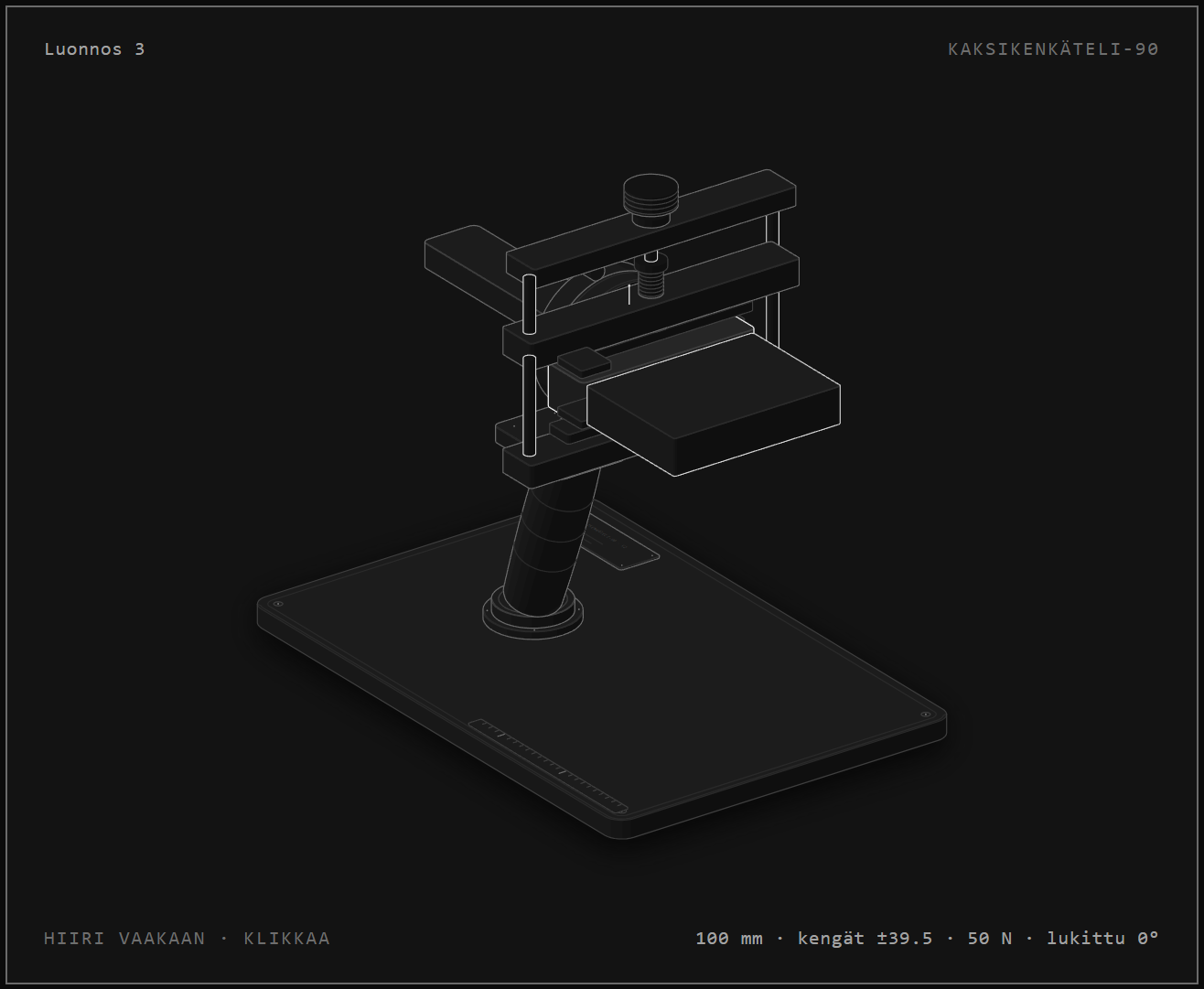
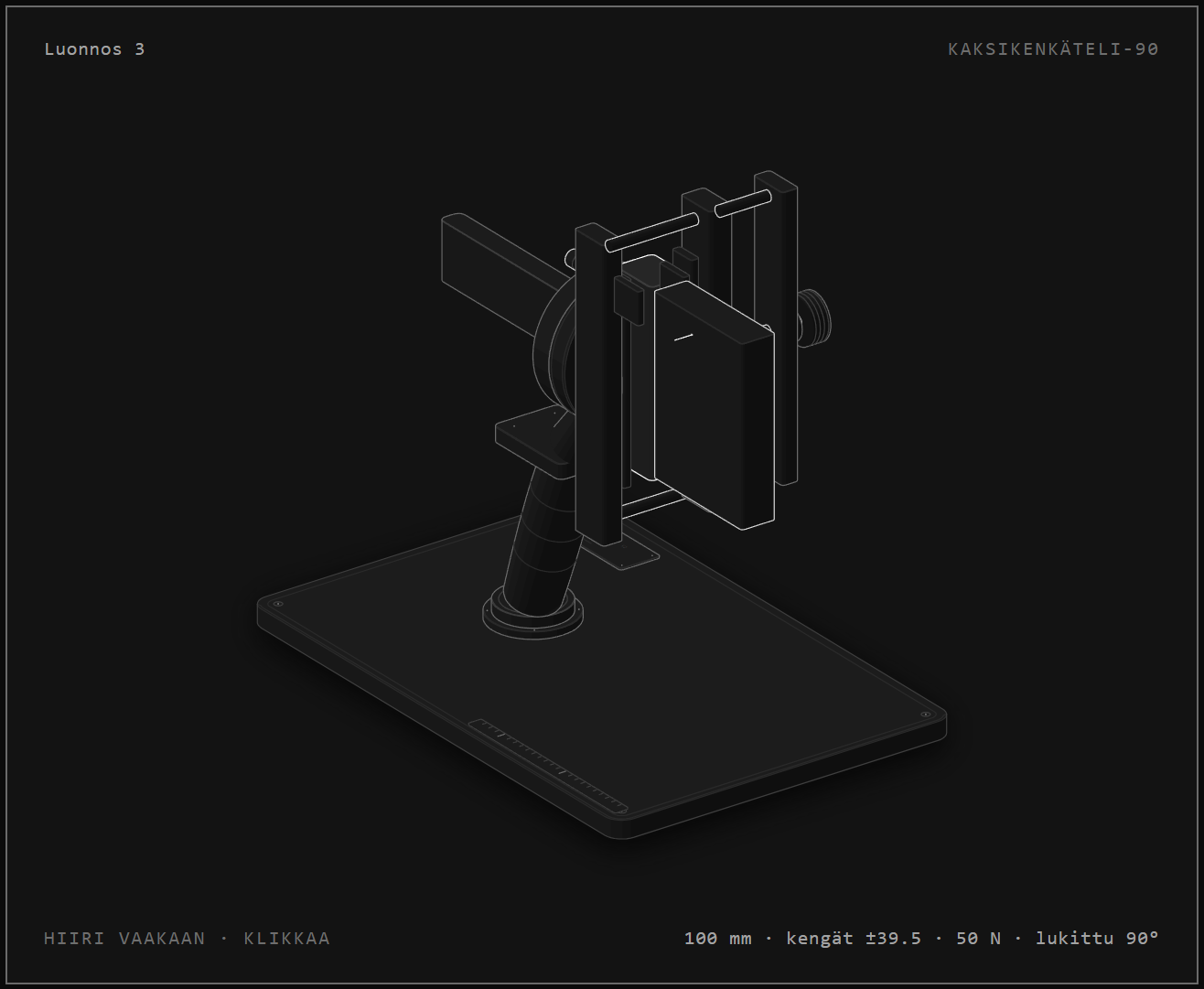
Move the pointer sideways over the figure. The brush slides into the holder, the clamp tightens and the holder turns 90°. Click to change the brush size from 50 to 120 mm. The figure is a draft, and its labels are in Finnish.
Starting point: a product from a trade fair
A trade fair showed a paintbrush with a pistol grip. The grip keeps the wrist straight, but grip and brush are one product, so the brushes come from the maker. My question was: could a grip take any brush from the shop? And is that already protected?
An AI team on the Hermes platform
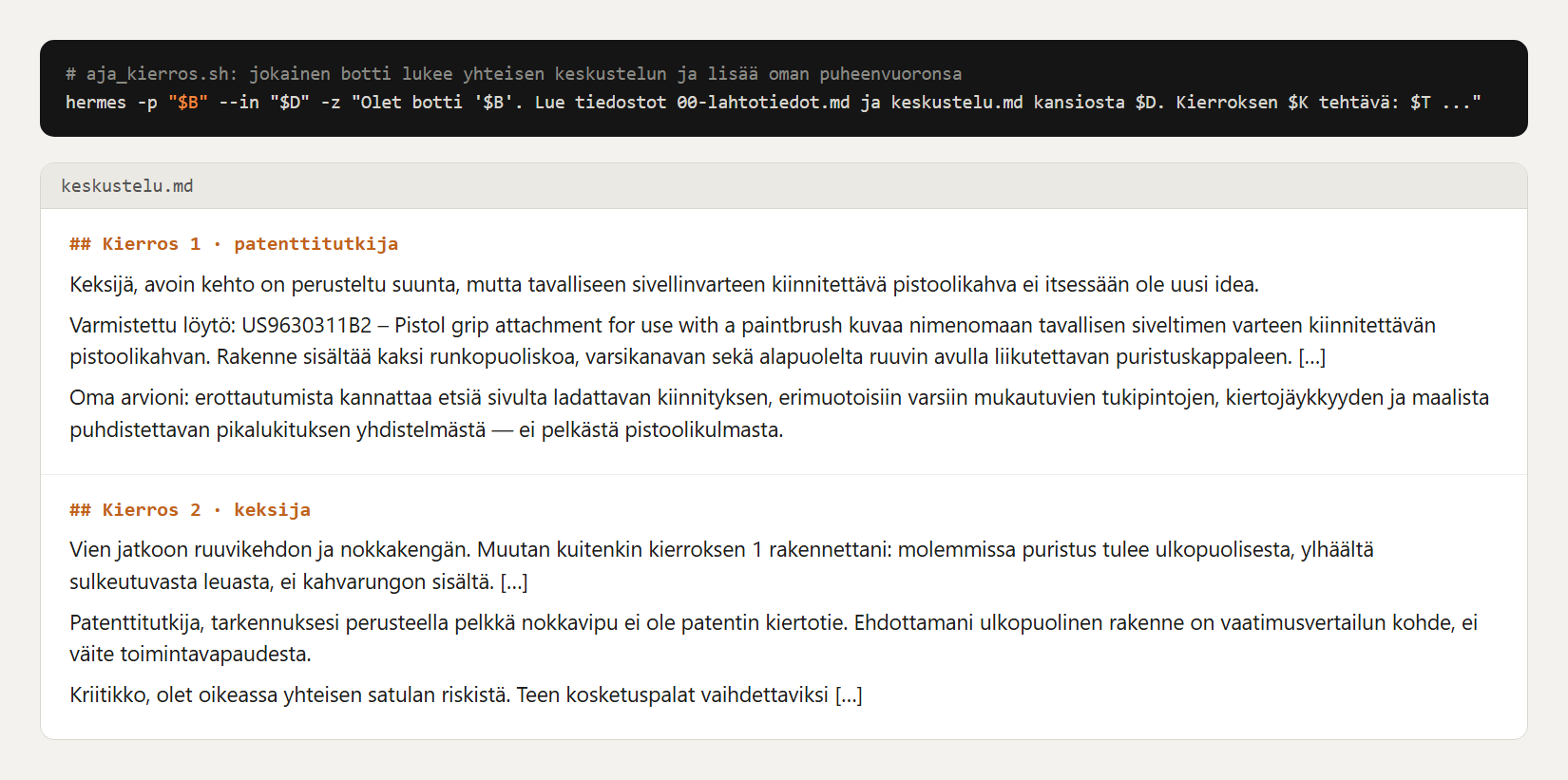
I built a team of four bots on the Hermes agent platform. Each has its own role: inventor, ergonomist, critic and patent researcher. Claude Code is the orchestrator. It gives the task for each round, and every bot reads the shared conversation file and adds its own turn. The bots address each other by name and change their positions. When the patent researcher found the closest patent, the inventor moved the clamping outside the grip body in the next round.
The patent researcher does the attorney’s groundwork
The patent researcher works like a patent attorney’s assistant. It followed citation chains backwards and forwards, searched CPC classes (for example B25G1/102 and B44D3/123) and mapped patent families and countries. The closest hit was US9630311B2: a pistol grip attached to the handle of an ordinary brush. According to Google it runs until about 2035, but its family covers only the USA. It also found the trade-fair maker’s own application WO2023146981A1, whose EP application designates Finland.
Claim analysis: what the patent really protects
A hit alone says little. The patent researcher broke the independent claims into features and compared the application with the granted version. The claims were narrowed before grant. The protection covers a specific combination: a clamp moving inside the body presses the underside of the handle, guided by oblique surfaces. Verdict: narrow mechanism protection, no monopoly on pistol grips. Simply replacing the screw with a lever is still not enough of a difference.
Design-around
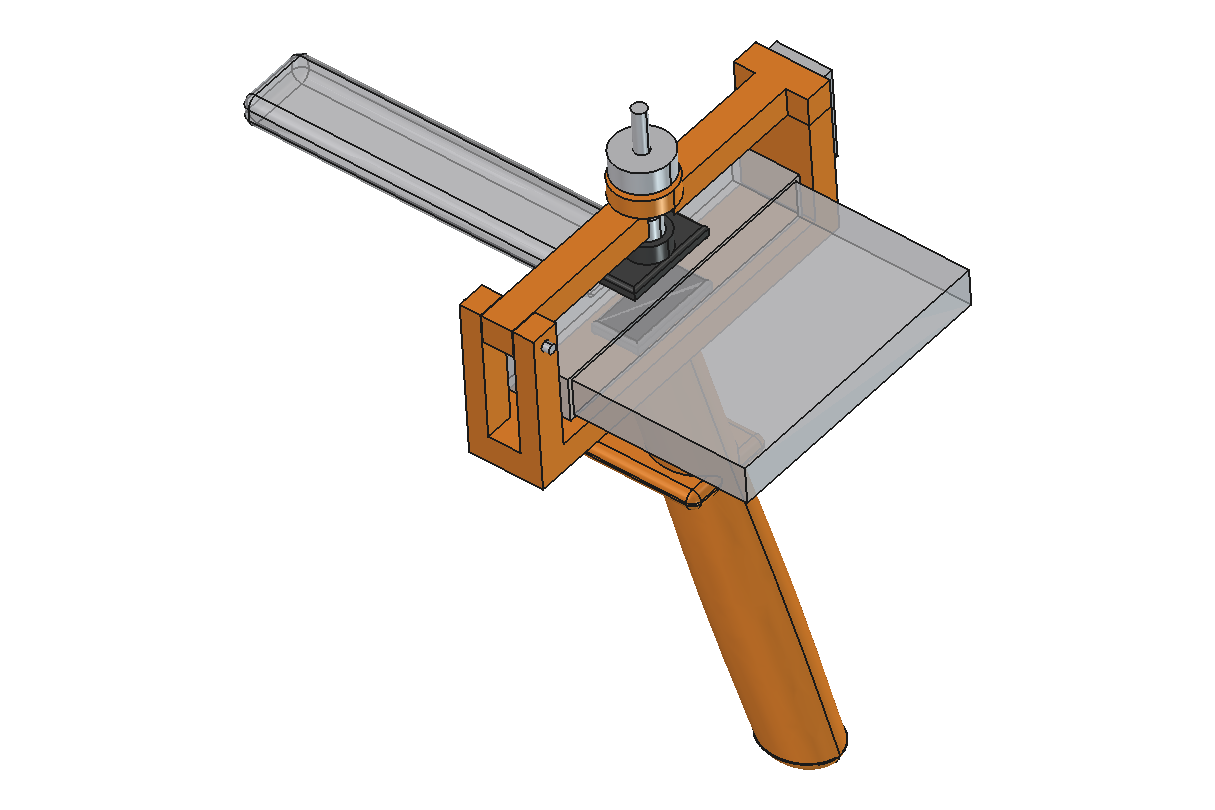
The inventor developed three ways around the patent and rated the equivalence risk of each. The lowest risk was the Ferrule Bridge: the grip does not hold the handle at all, but the metal ferrule of the brush. Then the handle channel and the handle clamp are missing altogether. I chose this direction. The ergonomist also calculated that the moment on the wrist drops from about 2.0 Nm to 0.8 Nm, because the grip is closer to the bristles. The patent researcher then checked US8839480B2, which also holds the ferrule. It protects a flexible sleeve and an extension pole, not clamping jaws.
Where the line is drawn
The bots flagged themselves what a professional must check: equivalence, legal status and changes to the EP claims. AI does not replace a patent attorney, but it did the search, the claim breakdown and the design-arounds in one night. The attorney gets a ready package. Nothing here is a freedom-to-operate opinion.
From figure to model
The solutions were first compared with interactive isometric figures. Claude modelled the chosen solution in FreeCAD with Python and checked the model itself: every part is a valid solid, and no part collides with another in any position.
Feedback and a second night
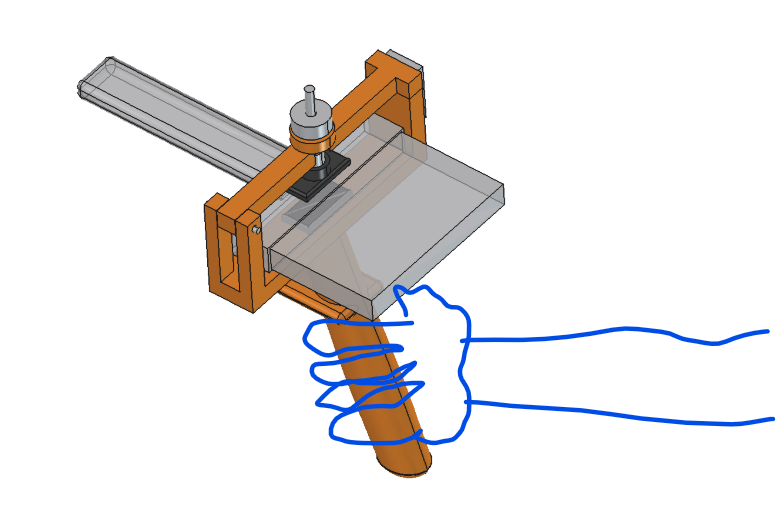
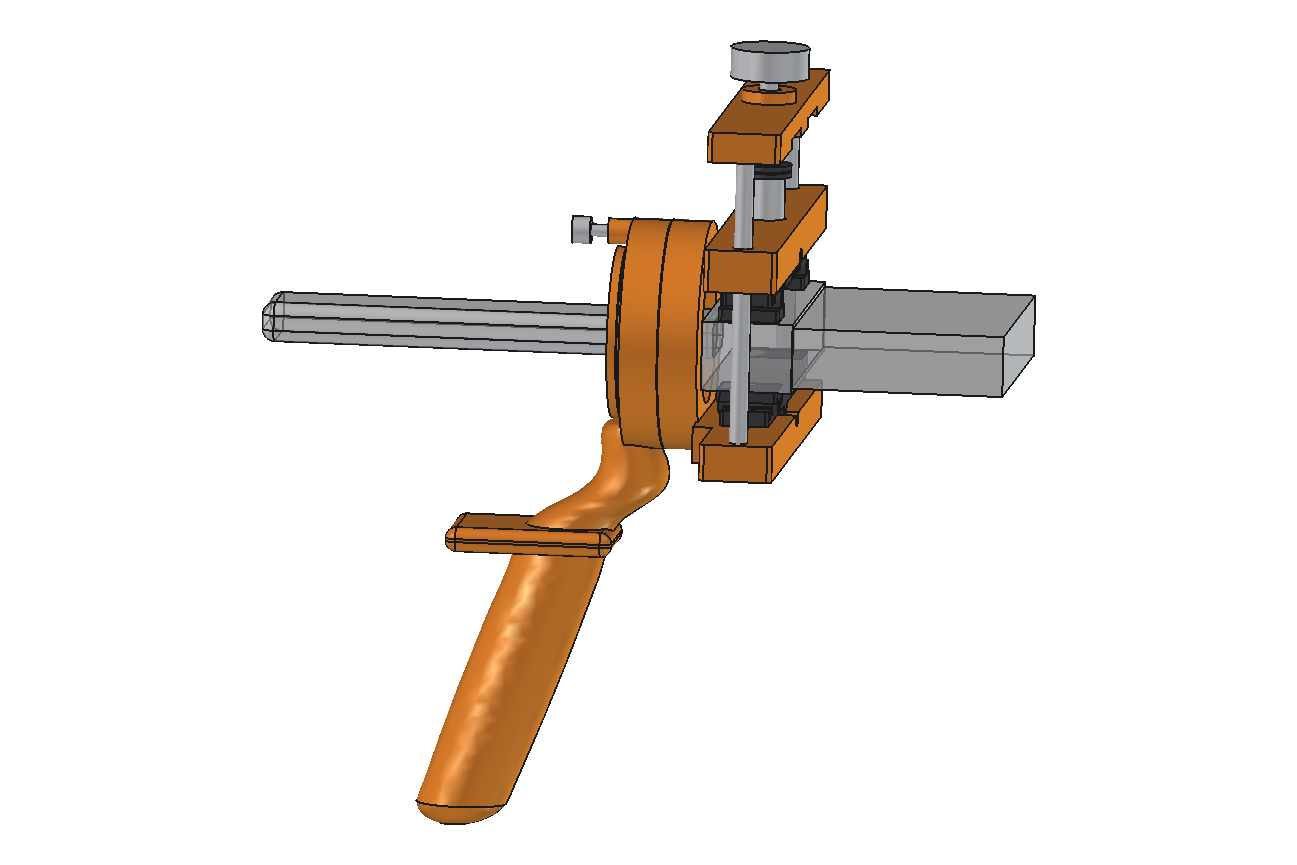
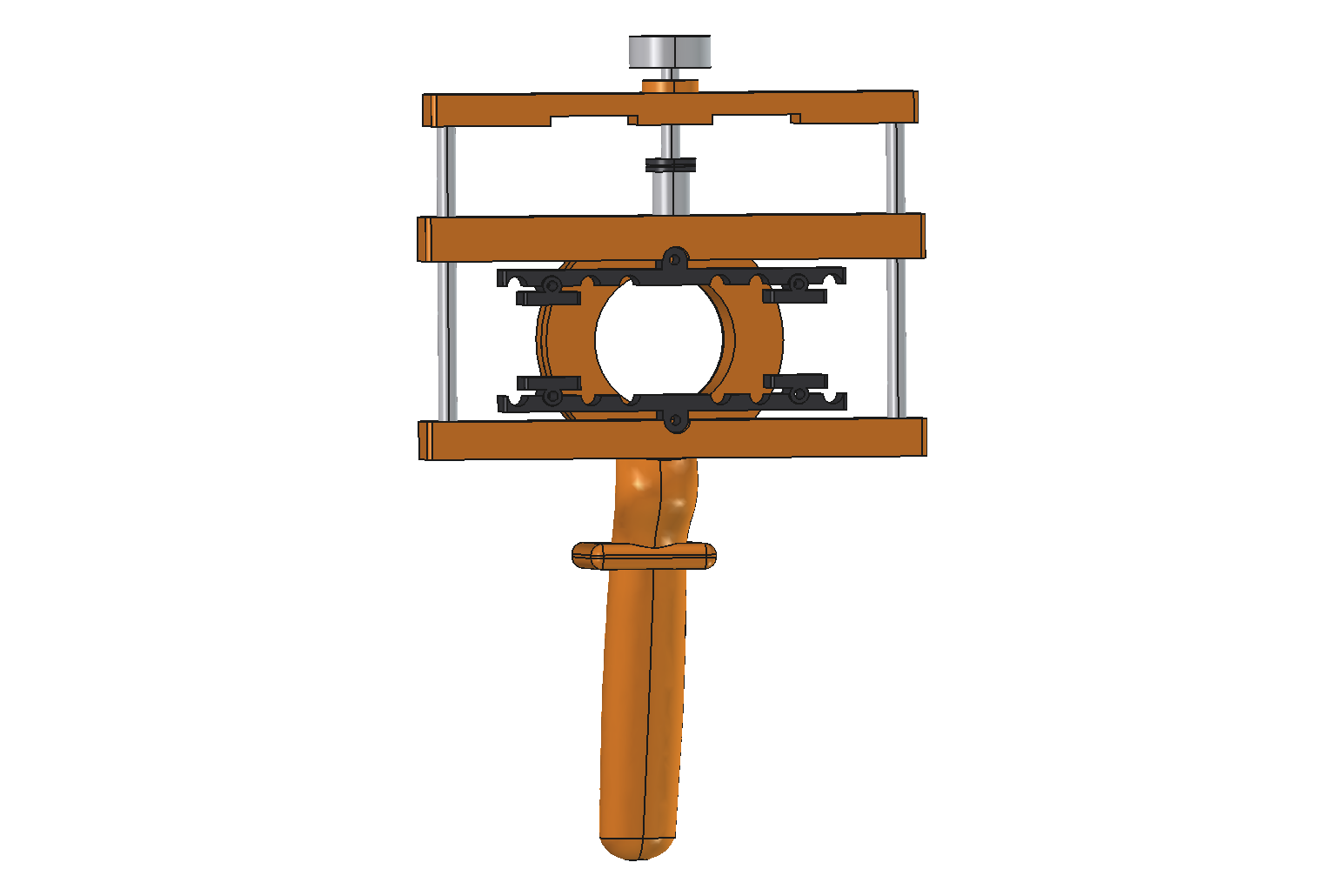
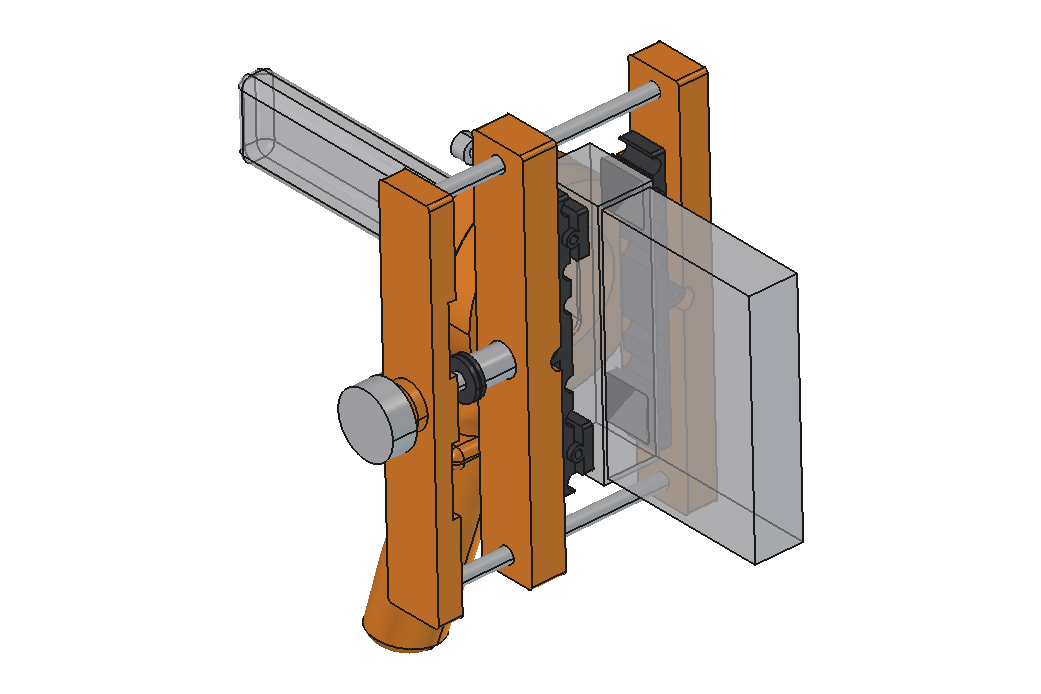
In the first version the brush was the wrong way round, and a small pad pressed the ferrule only in the middle. I gave my feedback with one image. On the second night the bots designed a bogie clamp: four rocking shoes press the ferrule across its full width. The holder also turns 90°, so the same grip paints horizontally too. The turning feature must still be compared with the maker’s application, whose claims include a rotating, locking head.
Result
The result is 12 printable parts as STL files and the whole assembly as a STEP model. The model still needs refinement: it weighs 219 g against a 150 g target, and brush ferrules must be measured before printing. This is a concept, not a finished product.
What was new
For the can crusher I talked with one AI. This time a team of several bots argued among themselves, and the chain included a patent review and a design-around. I gave the idea, chose the direction and gave one round of feedback. The AIs did everything else overnight on their own.
Tools
- Claude Code (Claude Opus 5.5)
- Hermes Agent: 4 bots
- Google Patents and the EPO register
- Anatomy skill
- FreeCAD 1.1
- Python
- STL and STEP
More project images.